Showing posts with label trees. Show all posts

Sunday, January 1, 2023

Aligning with Life: a Spiritual Response to Climate Crisis

I was reading an essay, To Take Wilderness in Hand by Michelle Nijhuis, in the book Old Growth.  The essay is about the controversy among restoration experts and Native planet advocates about whether to simply restore or "migrate' endangered species of trees, insects, birds and animals.  For many, many decades the position of both has been that "right plant in right place" meant only native plants that grew here before western contact.  We have all seen the havoc an invasive plant causes, right?   And fundamental to that is understanding that the plant is not destructive in its own native habitat.  But transplanted it does not have natural predators or other factors that limit it.  It can over run other plants and take sun and water from them and destroy balance.  We all know how transported insects have devastated whole forests who had no defense against them and no natural predator birds- and thus killing trees wildly.

This becomes even hotter debate when you start talking about animals and birds (and insects) being moved around or creating mitigation areas for them.   Many of the efforts to simply move animals to suit humans have failed miserably resulting in the death and even extinction of the animal species.   But also moved animals have wound up without predators ravishing the area they moved to.  The removal of predator species like wolf, coyote or bear have led to the gross over population of species they prey upon like deer or rabbits to the point that those animals then destroyed the local flora and fauna because things were so out of balance.  (Equally dramatic stores about the restoration of a whole ecosystem when those animals - wolves or buffalo were reintroduced where they had been.)

Therefore, naturalists have generally just taken the position that we should not be intervening - not transplanting plants, or moving animals, or removing ones we don't like...that we should leave nature to her own rebalancing methods.

However, now climate change has gotten so bad, so a new debate is taking place.   Particularly about trees that normally migrate to different temperature zones very slowly (by decades) by birds dropping seeds some score of miles away and the tree growing there and reproducing.   This is neither the speed nor distance that would allow them to migrate out of severe climate change.   Because a state 100 to 200 miles north may in fact come to have the same weather conditions that historically its neighbor to the south has had before climate change, some restoration specialists are now recommending trying to wholesale move species north to try to save them.   As we are also experiencing mass extinctions happening of many species greatly exasperated by climate change there are similar conversations about whether moving animals will be a necessity and what do we owe them given what we have done to their liveable environment?

As I read this essay, I felt deeply conflicted.  I have been in the "don't mess with things - God already created perfection" camp.  Aware that we have only unbalanced that perfection.  But the idea of no longer having any CA Redwoods is certainly unbearably sad.   What do we owe other species in the mess we have made?   Will trying to correct only create new unforeseen problems as has tended to happen with our interventions.  Even with the best science available to us - how would we not just screw it up more?  The article mentioned that in early attempts already made some succeeded and some failed.  In Diana Beresford-Kroger's autobiography she mentions her current project of bringing all rare nearly extinct trees to her property in CA to try to preserve them.   Her journey to find them has been remarkable and some last living species she found not in their tradition areas but where someone had transplanted the plant elsewhere, and it has survived therefore pests or blight. 

I lay meditating upon this and what came to me was a great surprise but did align with the notion of living in reciprocal relationship with plants and animals.   I thought about how Native people ask plants permission to harvest them and in other ways try to tune into them and listen to what they have to say.  It occurred to me that before these sorts of interventions could happen only if someone with the right skills first tuned in and asked if the plant or animal wanted to be moved.   Then if the answer to that was yes, a relationship of empowering service to the plant would need to take place.   The human moving it would literally have to listen to its guidance - its yes or its no about the location into which it would be relocated.

I realize for some this will be seen an idea way to airy fairy.   But for those that have followed the most recent science showing how plants and trees communicate with each other, and the great complexity of qualities that makes friendly habitat...it is not farfetched to say that a plant knows what it needs.

But what I am particularly struck by here is that this is a profound form of aligning with life this is - of coming into relationship with plants and animals in a way that respects their nature and their intelligence.   This is not a new concept for indigenous people but for western science this is an anthropomorphic approach to things.  Given the glaring failures of western science and the centuries of stewardship of Earth by Indigenous people we would do well to respect such approaches.

But beyond that it points powerfully to the way we need to conduct ourselves to start to stop and repair climate change.   We must align with life's longing for life itself.  Joanna Macy has always said Earth is on our side.  Earth also is fighting for survival.   But the Creator most certainly has programed everything to support life.  This is in fact the only way to be in reciprocal relationship with Earth - is to be in alignment with life itself.  To just serve life.  This is the only road map we need for how to fight for the life on this planet - is to align with life.


Saturday, July 9, 2022

Victory!


Victories do happen - and sometimes not at all as we have anticipated.   While working for TCAT, I had begun an effort to stop the neighboring town of Lacey from removing one of its two protections for residential trees.   And I continued this work for the first 5 months of my Restoring Earth Connection time. Like other local cities Lacey have what I call a “floor method” – they have set a very miniscule minimum number of trees you have to have on your property, and so you can cut all the way down to there.  (In fact, you can cut them all, but then you have to replant that small minimum number).  But their other protection which tended to act as a brake on getting quickly to this floor was they had what we called the 5 in 3 rule.  This rule said you could only cut 5 trees in 3 years.   But Lacey wanted to do away with this ordinance.  It was never clear what exactly motivated this (other than the ever going drive towards development) since they had a survey they did which showed clearly that the vast majority of the public wanted stronger ordinances or the existing ones enforced. 

It went to the planning commission – we fought there for 3 months – then it went back to city council and the fight started all over.  It would be scheduled for a vote, and it would get pulled, a special work session was called, etc.   It also became very clear that the staff wanted to do away with this rule, and we dealt with the frustration of having our three minutes of testimony and the staff giving an hour presentation.  We lobbied council members and who was on council changed during the 15 months and some council’s positions changed back and forth as well.   Over and over, we turned out the public to testify and to write letters.  Since the public will was clearly being fought and ignored at many points I prepared over and over again to lose, and yet….there always seemed hope and end apparently close at hand.  It seemed bad form to give up that close to a decision.

Before the final vote, I tried for 6 weeks to reach the council person I knew would be the swing vote, but there was little response and so the night before with no call I thought “Ok he is avoiding me, we are going to lose.”   But the day of the vote at 6pm, he called me at 2pm.   To my surprise he told me “No, we cannot eliminate tree protections” and “I will do you one better, I am going to propose that we change the protection to you can only cut 3 trees in 5 years”  And he did.  Almost all his colleagues were caught by surprise, but 4 of 7 voted for it.  I wish I could say they sited all the benefits of trees that we had been testifying too for over a year.   But what each of them sited was that they had heard over and over from the public who wants the trees protected.   So sometimes….public pressure does work!   I had simply been trying not to go backwards and yet the public pressure actually created forward motion.

It of course felt good to have a victory, and when we do we should surely celebrate them because there are many loses in climate work.  There are some who might say:  “So you saved some trees in one community…big deal how does that really address climate change?”   The Quaker Thomas Kelly expressed the idea that we are not each to die for each struggle, but rather to find the concern that God has made our heart tender to and to faithful to that particular one.  For me this is such a good example.  Climate change is way to big and covers way to many subject areas and is also everywhere now.   So we cannot define effectiveness by some earth shattering stop action…rather we must chip away at it, one bit at a time…each of us doing our piece.   It will only be controlled by each of us doing our piece and we may often have to do that when it looks like we are going to fail, and we are often going to do it painstakingly and drawn out battles.   This little example is a microcosm of the effort ahead of us.  I was faithful.  I did my part.  I kept going – and it had surprising results.


Monday, May 30, 2022

Seeds that finally sprout

 Sometimes it is very surprising the timing of a previously planted seed that one had given up on as infertile when it finally sprouts.

I have been working on tree ordinances since 2016 in Seattle and 2018 in Olympia...with very little effect.  But in Seattle when the new Mayor came in some traction finally happened and they passed part of what we had long asked for: creating an exceptional tree designation and a way of fining tree professionals that cut trees that should not be cut.  

Over this Memorial Day as a I hung out with my friend Abby she got a text from someone she knew that the woman's neighbor was trying to cut down to exceptional Doug Firs in their back yard.   They had clearly waited till Memorial Day weekend knowing there would be no city staff around to call on to stop them, and apparently not being able to find Seattle tree professionals willing to risk losing their liscense they had called someone all the way from North Bend.  The guy with the truck and picked up a few day labors from Home Depot to feed wood into the chipper - who had no safety equipment.

The woman who texted Abby had called on a friend of her's Sandy.  Sandy as it so happens is someone that we had recruited into the tree work back in 2016.  Sandy and her daughter rushed over.  The daughter filmed them up in tree.  She was standing close enough that they kept urging her to leave saying a branch could fall on her.  She refused telling them what they were doing was illegal and that she was going to report them.  While they did limb the tree up (meaning taking off the lower branches in preparation for cutting of the top and then sections of the trunk), they eventually in frustration pack up and leave.

By this time Sandy had alerted the tree community and we made plans for shifts the next day to protect the tree.  Someone called the media.  The next day the tree cutters did not reappear but channel 7 news did appear and wound up doing a nice story on the matter.   Some times the seeds you plant spout much later.

Recently in Thurston County I have been trying to lend support to a campaign started by the Center for Responsible Forestry in response to a cutting frenzy that Department of Natural Resources has gone on.  DNR is responsible for managing all state forest lands and they seem to see this task as about offering up which pieces of land to to be clear cut.  There are legacy forests among DNR lands.  These are forests that were handcut with band saws before WWII when the chain saw came in.  As a result the understory was not destroyed as is the practice of modern logging.  Thus it had regenerated and how has some trees from 120 years old to 80 years old.  This is amazingly resilient and diverse forest that is a climate workhorse drawing down many times more carbon than regular trees.   So we want to see this Legacy Forest in particular protected.   And yet DNR seems to be particularly targeting it to the point that their planned sales over the next 10 years would basically decimate it.

We have successfully gotten a sign on letter from all the major environmental groups in town to the county commissioners asking them to write to DNR asking them to stop it.  One of the clear cuts of smaller trees would create flooding and pollute a lake- the commissioners again are willing to intervene.  And as we do this work about  Legacy Forests I plant more seeds of understanding that big trees are more significant than small trees, that we must protect them, that we must have an exceptional tree ordinance in Thurston County.   And so we plant these seeds and wait for them to sprout.


Wednesday, March 3, 2021

What's Wrong with the Overstory

 I originally wanted to read the Overstory because it was about trees and I heard people talking about is a powerful and "sort of spiritual".    However, it took a group I was in deciding to read it as a book group reading for me to actually read it.  I would have stopped mid way through if it were not for being in that group because of the dark and sad stories of the people and their families.  But by the time I finished it I was quite mad about the message it brings to the world.

Most Americans are completely unaware of movement history and certainly don't know the even more obscure history of the environmental movement.  Historic fiction is always a challenging jaundra because while bringing certain events of history forward, by taking artistic license to tell the story in a presumably more interesting way, we run the risk that it is actually revisionist history.   Revisionist history is dangerous in the way it reframes actual events and frames how the public comes to think about something.  A good example of this is how movies for decades portrayed Native Americans as sneaky and violent and dangerous - thus retelling the reality of white settlers stealing their land, cutting "deals" for ownership with them that they did not understand and slaughtering them.  This was a historic fiction that recast who the actual wrong doers were.

So one of my big problems with the Overstory is it is historical fiction.  It tells, but not accurately real things that have happened in the world.   What angers me is it takes the real story of activists who have worked with passion and determination for the saving of our world and retells the story in ways that seem half baked, ungroundely idealistic or maybe mentally ill (Olivia hears voices telling her what to do), and violent.  The real people this story have been based upon have been very life affirming, optimistic and visionary folks who have acted with love and commitment.

So far example Patricia Westerford is based upon Suzanne Simard a research in BC, Canada who has studied extensively the way trees communicate with each other.  She gave a powerful ted talk about how trees communicate.  She is an extremely positive and enthusiastic person and it is an insult to her integrity that the character based upon her tricks the huge audience before her into thinking she was committing suicide in front of them.  

The LDF group is roughly based upon Earth First and environmental group which originally started as a non-violent environmental group.  As it began to focus more on tree defense there as a lot of disagreement within the movement about whether destruction of property was non-violent and whether it a legitimate tactic.  A group called Earth Liberation Front (ELF) split off and was committed to tactics including destruction of property - earning it the distinction of being the most "extremist" wing of the environmental movement and winding up on the FBI watch list.  What is lost in this historical fiction version is that Earth First did have a mixed record of success at protecting trees.  The mass occupation called Free Cacadia at the Warner Creek Timber sale site lasted a whole year and did save that land.  Another blockade at SugarLoaf Mountain site involving hundreds of activists did result in arrests and the cutting down of a 400 year old tree.  A third two year long blockade took place at China Left.  The novel does correctly report the intense police violence against the protesters.  It does not report one died from a cut tree landing on him and another died in police custody.

None died in the fashion that Olivia does.   Olivia appears to be a mixture of Judi Bari and Julia Butterfly Hill (more later).  Judi Bari was an ELF member whose car did blow up, causing injury to herself and a male activist also in her car.  She was later arrested by the FBI who charged her with transporting a bomb in her car for the purpose of doing damage to a site.  The case against her was dropped for lack of evidence and she put a civil suit against the FBI and the Oakland police which was won by her estate after her death resulting in a large award.    Therefore it is extremely disturbing to me that the primarily unproven charges of violence against the environmental movement or reinforced in this novel with the added indignity of their killing one of their own members out of sheer ignorance and incompetence.

The other half of Olivia's character seems to be based upon Julia Butterfly Hill.  Butterfly sat in Luna a 1500 old California Redwood for 738 days to protect the tree which was under danger of being cut down.  She did experience helicopter harassment, and a 10 day angry seige by angry loggers as well as harsh weather.   However, unlike the books description of bitter defeat, Butterfly won a settlement with Pacific Lumber to leave Luna and all trees in a 200 ft buffer zone (keeping with the science that trees live in community not isolation.)   It was one the aggravations to me that throughout the book little of the success of the environmental movement is communicated, this communicating the activists as driven by personal reasons to do futile things with no effectiveness.

In truth the environmental movement has suffered depressing defeats but also David vs Golith victories won by the sheer devotion of people who love the land.   But what is also completely missing out of this book at all is LOVE.   The characters rarely love people.   Mostly they do form blind loyalties to each other.  The men mostly adore a partner in a sort of dog like way, but are not loved back.  The woman don't seem to love.  There are none of the bonds between women which are the heart of movements, and because the people do not seem to actually love each other there is no love to motivate their actions.   What we are presented is that they love trees instead of people, and that they experience people as sort of monstrous, ignorant or cruel.   While certainly those qualities do also exist in the human condition, so do kindness, compassion, hopefulness, vision, collaboration, cooperation, and passion which is born of love.   These qualities are notably absent from Overstory, and is I think the reason why the book felt so dark to me.

In the end this novel, and its revisionist history plays into several false narratives that the environmental movement has long fought against: 1) that they are impractical idealists, 2) that they care more about trees and animals than humans. and 3) that they are a violent rather than non-violent movement.  All those things made me mad but the thing that made me the most mad is how some of the miracle of nature are both shared in the book but then used to make the cyncial point that we will kill ourselves but that the planet will live on.

I have heard this idea thrown out before, it is a popular one on the left: that we are only killing ourselves, that when the climate movement calls out the destruction of the planet - that the planet has great healing powers and therefore it will slowly use the power succession (described in the final discoveries of Ray and Dorothy) to restore itself.  It is absolutely true and very comforting that nature, in all of its systems great and small, is designed to rebalance, and rebalancing that means restore and heal where damage is done.  I have written about this before in my post on hope.  If we would get out of the earth's way it would heal.  Even now just on the edge of catastrophic and unrepairable damage to our ability to grow enough food if we heat the planet too much, even now in the midst of the 6th great extinction, the earth could heal itself if we IMMEDIATELY stopped all the fossil fuel heating.

But what I am sick of is how some people use this idea that it is only us who will die, as some self hating way to give up.  The statement is often made we simply deserve what we will get.   This statement however ignores all the other species of plants, animals, birds and insects we are taking down with us - and how we have no right to do that to them.  It also takes no account of how many millenia the recovery will take, as if that is of no matter, and how completely inappropriate it is that we few cells of the planetary experience would wield this disproportionate power.   As Powers rightly reflects if all of the earths history was reduced to a 24 hour cycle humans appear in the last two minutes.   Why then do we get to take the whole thing down?

To me this is simply a cop out, an arrogant excuse for not trying, for surrendering to other humans who are acting out of greed or ignorance.   NO, if life is oriented towards life...then we as life forms must also be orientated towards life, and the defense of life.

To me what is most disappointing about this book is during my activism the trees have been teaching me (as shared in other blogs) their truths.  They have been teaching me that we are in a reciprocal relationship - what they are doing for me and what they need from us.  It has been pure joy to learn the miracles of their interdependent relationships with each other and their power of succession.  To learn the wisdom with which they take care of each other...and us.  (Just the other day I learned that studies show they have been becoming more effective at drawing down carbon as climate change intensifies!  Miraculous!) And so it is painful to read those truths woven into a narrative that is dark, pain ridden and pessimistic.  As a therapist deeply aware of the despair that teenager and young adults are feeling in the face of climate change, the suggestion in the book that Plant Patty when talking on What we Can do? might answer with suicide as heroic/sacrificial act is a deeply irresponsible offering. I believe this author will be responsible for some actual teen suicides as a result.  That is so disappointing because these same facts about the natural world could have told a story of hope.

For me that miracle that the trees are the lungs of the earth (and recent studies show have actually become more efficient under climate change - still struggling to do their part to rebalance the system) and the ocean currents are the circulatory system of the planet....then clearly we are each just one single cell in a much much larger and greater life system.  It is time we learned our proper place in that system and learned to treat the body we depend upon not as we are its master but with the gratitude, respect and homage it deserves!


Sunday, November 29, 2020

The Truth about Trees

 I am sitting through another meeting where someone is saying that it is ok about the trees being cut down because there will be replacement trees planted.  I sigh.  I have come to learn that our public education system teaches people nothing about trees, and thus most people know nothing about them.   Most of us cannot identify anything but the most basic trees a Maple, an oak or an "evergreen" (which is really many many trees which we are lumping into one category.)   We view trees as pretty, and practical - meaning they are good for building stuff and making paper.  But because they can "grow again" we think nothing of cutting them down.

Here is a list of some of the things I wish people understood about trees:

Trees Improve Air Quality by removing pollutants

Lower Asthma Rates

Studies show lower rates of Asthma in neighborhoods with greater tree density.  Low income neighborhoods tend to have fewer trees making this an equity issue.

Prevent Heat Islands

Cities can be 12F higher than other areas because of density.  Under climate change this can be fatal.

Lower Heating and Air Conditioning Bills

Trees provide cooling benefits in the summer and wind-chill reduction in the winter resulting in energy savings in nearby buildings. Olympias street trees in 2019 alone provided energy savings of 785,00 about $330 per building.

Storm Water Retention

Trees reduce and slow stormwater by intercepting rain in their leave and branches.  It is soaked up by tree roots rather than runoff from streets and sidewalks.   This can help prevent flooding, stream bank erosion, habitat destruction, sewer system overflows and contaminated water bodies.  The technological ways of managing storm water are expensive!

Drought Prevention

By roots drawing water into the ground they help lessen the impacts of drought.  This will increasingly matter with climate change.

Wildlife and Insect Habitat

Trees provide critical habitat for birds, mammals and insects.  Part of the loss of bird diversity is attributed to loss of habitat.

Mental Health benefits from proximity to trees

Studies show lower levels of depression if people can even see a tree out their window.

Aesthetics/ increase property values

We of course find trees beautiful but that beauty also translates into higher property values.

 Carbon sinks

Trees absorb carbon dioxide from the atmosphere.  The carbon is stored in its roots and in the soil, thus reducing carbon emissions in the air (carbon sequestration.) Carbon sequestered in this way helps to maintain and regenerate the surrounding community of trees and other plants. As long as the tree is allowed to live, it continues to store carbon and keep it out of the atmosphere.  When it is cut, according to the Sierra Club, 60% of the stored carbon is immediately released to the atmosphere – the rest depends upon how the tree is used.

Trees take in Co2, a greenhouse gas, and, in exchange, they transpire oxygen which we breathe.  Street trees in Olympia collectively sequester more than 420,000 pounds of carbon every year (~2 metric tons).  Each street tree on average has stored over 2,000 pounds of carbon over its lifetime and continues to store carbon as it grows.  Street trees in Olympia have stored more than 5 million pounds of carbon!

Zarghami, H. An Ecosystem Assessment of Olympia’s Street Trees. Evergreen State College. 2020.

Thus when we talk about cutting down trees we must understand we lose their stored carbon and we lose their annual drawdown capacity and we lose all their future annual drawdown which would occurred till the end of the trees natural life which for many species is longer than a human life.

The IPCC’s most recent report has said that we can no longer globally avert disaster by reducing emissions alone.  It has stated that we must aggressively plant trees world wide in order to increase our capacity to sequester GHG’s.   

All trees are not equal (and this is why I wince in those meetings where they talk about cutting down a great big tree and replacing it with a sapling)

A 30” tree provides 70% more “environmental services” than a 3” tree.

The following table shows Carbon Sink or Sequestration per EPA data:

From the EPA

Hardwoods

conifers

1 year old tree

1.6 to 4 lbs carbon/per tree/annually

.9 to 2.2 lbs carbon/per tree/annually

35 year old tree

20 to 79.3 lbs carbon/tree/annually

15 to 65 lbs carbon/per tree/annually


This is critical to understand since typically developers give lip service to the cutting of trees by saying they will plant replacement trees.  Even when they plant the same number (which is rare) they are not replacing the level of environmental services those trees were providing.  To cut down even one 30” tree would require replanting with 70 3” trees to drawdown the same amount in the next year.  That is why they are called Exceptional trees.  They are irreplaceable.  It takes about a 100 years (depending upon species to achieve that same level.

One of my friends wanted her neighbor to cut down a 100 year old tree in their yard to improve her view.  I said: "Respect your elders...that tree has lived way longer than you".   She thought I was making a joke.  I was not.  The tree has been witness to a 100 years of human goings on, it holds wisdom.  Almost all trees are part of a community - connected underground to other trees.

When you understand the list above of all the things trees do for us, you realize that we are part of an ecosystem in which they are supporting us.  It is about time we returned the favor and protected them.


Monday, May 25, 2020

An Earthavist, not an environmentalist

Most of the activists I know in the climate movement are environmentalists…for decades.  I didn’t come to it that way, and it is still not my primary identification – just one I know as that of my allies.  I came to it as a social justice activist.   A born and bred city girl who has lived most of the decades of my life in big cities, I have cared most about people.  I love the way they laugh, the sound of children playing, and the intense way we love each other.  I love what we can do when we collaborate.  I am thrilled by our ability to learn and grow.   Evolution to me is about evolution of society and how we treat each other.  Therefore, issues of equality and non-violence and compassion have always been central to me.

I became an activist at the tender age of 16.  I had gone into a grocery store with my Dad and someone was passing out fliers about the United Farm Workers boycott on grapes and lettuce.   It described the appalling and inhumane working conditions that the workers suffered and why they were calling for this boycott to put pressure on the growers to pay them fair wages and improve their conditions.   I thought: “That is terrible.  Someone should do something about that” and then a voice from somewhere said: “And who is someone?”   I worked on the boycott for the next two years spending Saturdays outside grocery stores passing out fliers until they won.

That was followed by a brief enough dip into nuclear power to know where I stood on that and then at age 20 all the young men my age were required to register for the draft.  As a lifelong pacifist I knew where I stood and proceeded to date a series of young men who were public non-registrants (speaking out about their refusal register and risking and sometimes being prosecuted and imprisoned for this choice.)   I worked on anti-conscription issues for the next 3 years till the sexism of the movement got to me.  

I worked for the next 10 years on teaching non-violence to prisoners and prisoner’s rights.  That work was bookended by getting arrested at the White House protesting President Reagan’s initial cuts to the safety net of programs for the poor (now seeming minor compared to the Republican onslaughts that ravished afterwards).  And bookended on the other end by my involvement in the Pledge of Resistance an effort to “stop the next war before it starts”  by strategic nonviolent protest against US covert involvement in Central American and the toppling of democratically elected leaders there.  In that insistence I was arrested blocking a Federal building entrance in a “die-in”.

By this time, I was 36, married and had given birth to a small baby and became by 38 a single parent, mostly without child support.   So my decades of activism ground to a halt and for a decade I just parented.  When at 47 I remarried and did not have to spend all of my time parenting and earning money I was happy to be able to turn my attention to my concerns for social justice.  When I looked across the landscape and asked myself “What should I do now?” the emergence of climate change made fairly obvious the answer.  It was clear that every other thing that I had worked on or had ever cared about would be wiped out, destroyed or ruined by unchecked climate chaos.  It was clear to me that if I wanted my daughter to be able to live out all the days of her natural life that I would have to start now while she was 7 protecting her old age and protecting my unborn grandchildren.

So I became a climate activist.  It was puzzling to me at first why my fellow activists always identified themselves as environmentalists since it was clear to me that the impacts of climate change would be felt way beyond the impacts on the environment.   And it was also puzzling to me why they were sometimes offended that I did not identify that way and made clear that I did not.

However, as I have worked on this issue it has been working on me – the Earth has been calling me home, teaching me a new relationship to the earth.  As I worked first on divestment (see later post) I learned how our systems not control us rather than we them.  As I worked on protecting trees, at first out of the wrong mindset – out of seeing the trees as “things” that reduced carbon and thus were needed, the trees taught me that they were living sentient beings in and interdependent relationship with humans (see post of Tree Hugger).  As I worked on food issues because they rank really high in Drawdown as solutions to climate disaster, I learned the disastrous results of our rape and pillage approach to the land.
   
I learned that the techniques we use to grow food abuse the land and thus release GHGs, use excessive fossil fuels and produce unhealthy food.  I learned that when we use techniques that mimic nature or tune into its own cycles, we actually sequester carbon, restore the soil and produce healthy foods.  As I have worked on trying to get a climate mitigation plan passed for my community I have come to realize the shortcomings racked up even those who care deeply if we still engage in Decartian error of dualistic non systemic thinking.  In other words, is we attempt to address only what GHG we create in our county we cannot think about the problems systemically and holistically.  We are, in essence, again separated from the earth and getting in sync with her.

I certainly was raised in the paradigm that saw humans as having dominion over the earth and my concerns for human justice issues were part of seeing humans as supreme.  Climate work has brought me back into relationship with the earth.  Now I am an Earthavist.  An activist for whom the earth, and its well being is primary.  I am someone who see the Earth as an entire eco-system of which humans are apart.  They are still a part I cherish and I long for a more justice humane society.  But I have become entirely clear that without justice we will never make the changes we will need to make to survive.  But I have also thankfully been brought back into a deep gratitude for the natural world, my home, and to the fight for our shared survival.


Monday, March 30, 2020

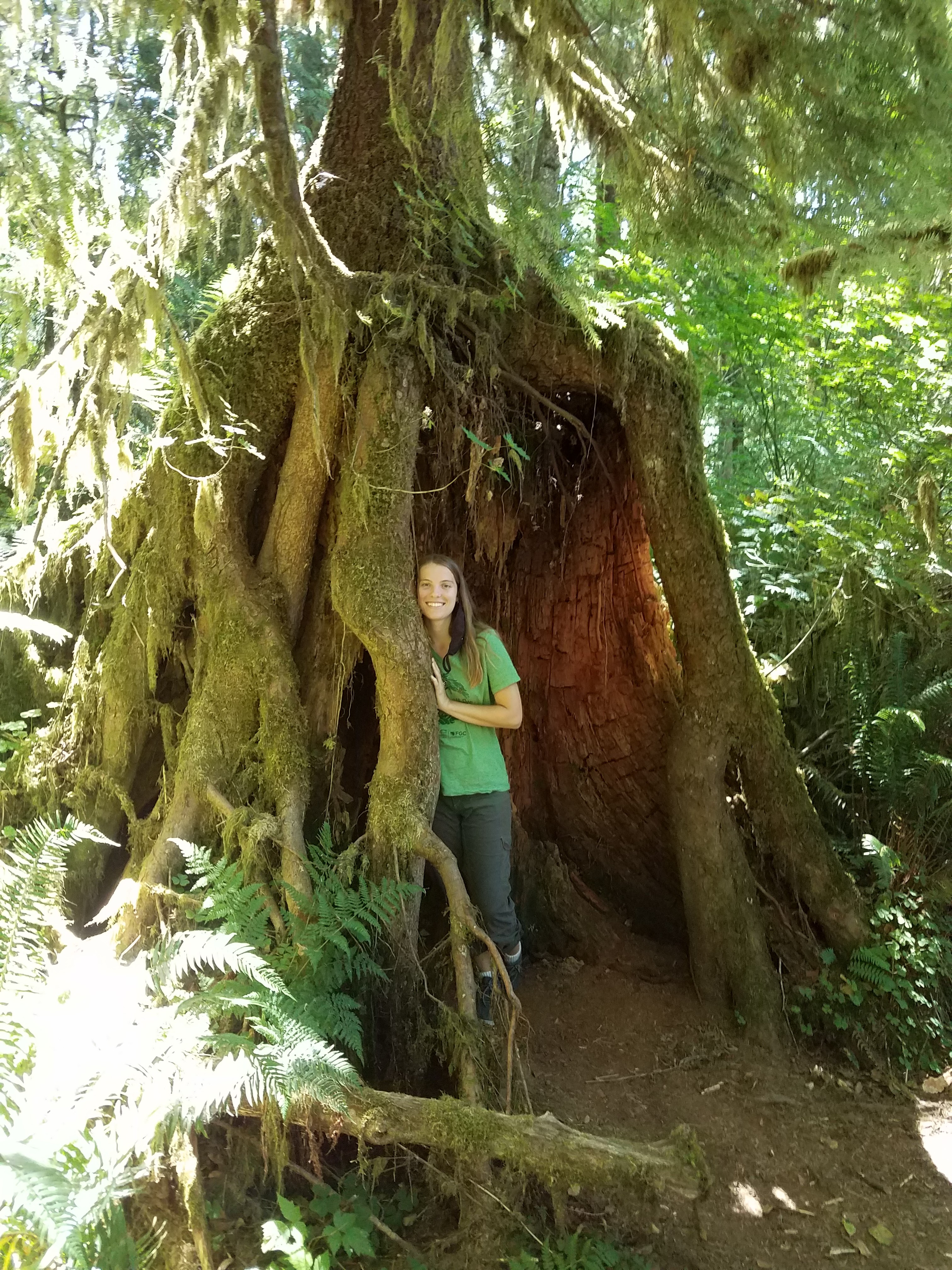
Conversion to Tree Hugger

I always appreciated that there were tree huggers and thought it unfortunate that this was used as a pejorative insult.  But I wasn't a tree hugger.   Sure I always appreciated that trees were beautiful, but that was pretty much it for me.

But then while doing my climate work I started working on protecting trees because they are carbon sinks.   This is old paradigm thinking.  It is still seeing them as things which serve humans.   But you know the simple fact that they remove greenhouse gases from the air was not enough to convince Seattle City Council members or three Mayors that we needed a new ordinance to protect them. 

However in the course of trying to convince them I learned the following things about trees:

  • They remove pollution from the air - thereby reducing asthma rates where they live
  • They are literally removing Co2 and creating oxygen for us
  • They provide enough shade to prevent "heat islands" and greatly reduce air conditioning
  • They are more effective at storm management than our technological "solutions"
  • Studies show just being able to see a tree reduces depression in humans
  • They are habitat for birds and bugs that we won't have otherwise
  • They share nutrients and communicate with each other under the earth through thin root like threads.  They look out for each other (more than I can say for many humans).
  • The older the tree the more carbon they are sequestering per year.
I started to realize that the trees were providing critical "eco-services" to us and we were taking them completely for granted.  The more I was trying to promote their protection in a city undergoing a huge building boom (and in which trees were disappearing at an alarming rate), the more I could hear the language - how others were thinking about them.  They were thinking of them as "things" and they saw them as: to be cut and used (ie as wood), as in the way (that blocks my view or I want to build there), as money to be made (board feet) or as not even as living.

How did we become so cut off from the eco system that keeps us alive that we don't understand that we are in relationship with trees?

One of my friends was talking about putting her hands on a tree and talking to it.  I was agnostic about that idea.   Then I had a really bad tree lobbying day.  I pulled up to my office where a row of 20" diameter trees head the parking lot.  I walked up to the tree and put my hands on it and said: "Mark (name changed) is ruining this for our whole group".   The tree said back to me without pause:  "Mark loves trees too."   It was a good reminder that my screwed up allie did have a common goal with me.  At the next meeting I asked us all to share before we started what our favorite tree was.  Mark broke into a broad smile and talked fondly about his feelings for Maples.   It did reconnect me to Mark. 

It has continued.  During a very upsetting meeting at my church where someone was behaving in a very toxic way I headed out in the yard and to the nearest tree.  I put my hands on the tree and said: "This is awful!"  The tree responded: "Send the toxins down into the earth like we do".     Now when I say the tree responded you may think either I am crazy or that I am anthropomorphically attributing to the tree what I want to hear (like an imaginary tree).   But all I can tell you is those are the words I heard and they were NOT at all what I expected.  If I had made up my own answers they would have been quite different (and not nearly so helpful). I was surprised how quickly the trees spoke, how they needed no time to gather there thoughts.

One of the campaigns created by a colleague to protect the trees was called Save the 6,000 (Lidar had showed that Seattle had just 6,000 exceptional trees - those over 24" in diameter left from its second growth).  For this campaign people were invited to find trees of this size in their neighborhood and take pictures of them and post them on the website for the campaign, so that we could identify where they were in order to protect them (but also to help bind people to these trees in their neighborhood).  https://www.thelast6000.org/how-you-can-help.html

I had gone with great enthusiasm to take pictures of some of my favorite trees - ones that I had lived with and stared at for a number of years.  I excitedly went to submit them on the website and then discovered that they were asking me what kind of tree it was?   What kind of tree?  Wow for a tree advocate I felt so incredibly stupid.  I did not grow up here.  I could tell you a lot of deciduous tree types in Illinois ....but here well it was good that the term Evergreen sort of covered everything.  Except that was not going to work on this website.   So I spent a lot of time looking at websites trying to figure it out.  I realized I should have paid attention to the cones which are incredibly helpful clues and also more about how the needles are on the branches.

But this interesting thing happened.  It was like you went to the same bus station every day and saw the same person till the bus got there.  Suddenly one day you start to talk and you exchange names.  They go from being a stranger to being a "real person" in your life.  Over more time maybe even a friend.   Well suddenly when I was walking past trees noticing their size and beginning to wonder their species - their name mind you, well the trees stopped being strangers in my life.  I'd already learned how amazing they were - Now I wanted to know them all by name.   That was probably the cross over point to being a bonafide tree hugger.


I have known people who have gotten arrested sitting in large trees so they would not get cut down.  In some ways I respected that they could care that much about one living being.  But in some other way it has seemed to me like focusing on one drop of water in an ocean.   Like there are so many social evils in the world, so many good causes, why not get arrested protesting a whole issue, a whole cause - something bigger.

I don't see it that way any more.   Now to be arrested with my arms wrapped around a tree protecting it feels like making a much bigger statement about needing to stand up for our eco-systems, protect the life forms that provide for us, to actually literally rejoin the Living Earth within which I am simply one breathing life form in an interdependent web of life.

As Robin Well Kimmerer says: "You cannot take something without giving back.  The tree takes care of us, so we have to take care of it."


Poem: Rushing towards Life

 Red flowering current blossoms bursting forth for Spring.  Converting Light. River rushing, gushing, over-flowing, exploding             ru...